
How to Recognize Anxiety Symptoms in Children and Seek Online Help
Childhood anxiety rarely announces itself as worry.
It shows up as a stomachache every school morning that disappears on Saturday. As a child who suddenly cannot fall asleep alone. As anger at bedtime, refusal to go to a birthday party, or a hundred questions about a trip that is still three weeks away.
Parents often spend months wondering whether they are looking at a phase, a personality, or a problem. That uncertainty is reasonable, because the signs genuinely overlap.
How Common This Is
Around eleven percent of American children aged three to seventeen currently have a diagnosed anxiety disorder, according to national survey data compiled by the CDC. Anxiety disorders are also the earliest-emerging category of mental health condition, with a median age of onset around six.
In Ohio the figure is slightly higher than the national average, at approximately twelve percent of children aged three to seventeen, and close to one in five Ohio teens. Ohio data also shows that around fifty-six percent of those cases are rated moderate or severe.
The point of these numbers is not alarm. It is that a parent noticing this is not overreacting, and that treatment is well established.
What Anxiety Looks Like at Different Ages
Symptoms shift as children develop. A pattern that is normal at four is worth attention at ten.
| Age | Body | Behaviour | What They Say | What School Sees |
|---|---|---|---|---|
| 2 to 4 | Sleep disruption, appetite changes | Clinging, tantrums at separation, difficulty settling | Limited language for feelings, do not go | Distress at drop-off |
| 5 to 7 | Stomachaches, headaches | Refusing activities, needing a parent in the room, regression | My tummy hurts, I do not want to | CFrequent nurse visits, reluctance to speak up |
| 8 to 10 | Recurring stomach and head complaints, tiredness | Reassurance seeking, perfectionism, avoiding new things | What if something bad happens | Incomplete work, avoiding presentations |
| 11 to 13 | Sleep problems, muscle tension, nausea | Withdrawal from friends, avoiding social events, irritability | Everyone will judge me | Absences, dropping participation |
| 14 to 17 | Insomnia, appetite changes, panic symptoms | Avoidance of school or work, substance use, isolation | Often nothing, or I am fine | Falling grades, chronic absence |
Anxiety in younger children is more physical than verbal, which is why it is so often routed through a pediatrician office before anyone thinks of anxiety.
The Test That Cuts Through Most of the Confusion
There is one pattern parents can check themselves.
If the stomachaches happen on Sunday night and Monday morning, and are absent on Saturday afternoon, that is a strong indicator of anxiety rather than a physical illness. The same applies to headaches, nausea, and fatigue that track the school calendar.
This does not mean the pain is imaginary. Anxiety produces real physical symptoms through real physiological pathways. The child is not pretending.
Worry Versus Disorder
Most children worry. The line is drawn by four things.
Frequency
Most days, rather than occasionally.
Duration
Different conditions carry different thresholds. Generalized anxiety requires symptoms lasting more than six months. Selective mutism requires at least one month, excluding the first month of school.
Impairment
This is the practical test. Is it costing school days, sleep, friendships, or family routine? A child who worries but still goes, still sleeps, and still has friends is in a different position from one who has stopped doing all three.
Trajectory
Getting worse over months, rather than fluctuating.
What Professional Screening Adds
The US Preventive Services Task Force recommends screening for anxiety in children and adolescents aged eight to eighteen, with a Grade B recommendation issued in 2022. For children seven and under, the Task Force concluded there was insufficient evidence to make a recommendation either way.
Practically, this means your pediatrician should already be screening school-age children, and you can ask for it directly.
The most widely used instrument is the SCARED, a forty-one item questionnaire completed by both the parent and the child. A total score of twenty-five or above suggests an anxiety disorder may be present, and scores above thirty are more specific. It also produces subscale scores, including one for school avoidance where a score of three or above is a flag.
A questionnaire is a starting point, not a diagnosis. Its value is that it converts a parent impression into something a psychiatrist can act on.
When to Seek Help
Sooner than most families do. Reasonable triggers include:
- Symptoms present most days for several weeks
- Missing school, or repeated requests to stay home
- Sleep consistently disrupted
- Withdrawal from friends or activities the child used to enjoy
- Physical complaints with no medical explanation
- A child expressing hopelessness, or any statement about not wanting to be alive, which warrants immediate attention
The last item is not a wait-and-see situation. The 988 Suicide and Crisis Lifeline is available at any time.
What Treatment Looks Like, and How Well It Works
Cognitive behavioural therapy is the first-line treatment for childhood anxiety, and the evidence behind it is unusually strong.
The Coping Cat program, one of the most studied approaches, runs sixteen weekly sessions of about fifty minutes for children aged seven to thirteen, with a parallel version for adolescents. It holds the highest evidence rating from the California Evidence-Based Clearinghouse. In follow-up studies, around eighty percent of children no longer met criteria for their primary anxiety disorder a year after treatment.
The Child and Adolescent Anxiety Multimodal Study compared approaches directly. At twelve weeks, response rates were around sixty percent for CBT alone, fifty-five percent for other formal modalities alone, and eighty-one percent for the combination. By week thirty-six the differences had narrowed considerably, with CBT alone reaching around seventy-one percent.
This is why CBT is usually the starting point for mild to moderate anxiety, with additional medical evaluation considered when symptoms are severe or when therapy alone has not produced enough change.
How Online Therapy Works With Children
Parents reasonably ask whether a young child can do therapy through a screen.
Younger children are often more comfortable with video than adults expect, particularly from their own home with their own things around them. Sessions for young children tend to be shorter, more activity-based, and involve the parent for part or all of the appointment. Older children and teens usually meet alone, with parent check-ins scheduled separately.
A few things help.
- A quiet room with the door closed, and headphones for older children
- A device on a stable surface rather than held
- A short technology test before the first session
- Agreement in advance about whether you are staying in the room
Parent involvement is not incidental. In childhood anxiety treatment, parents are taught how to respond to anxious behaviour, because well-intentioned accommodation, such as letting a child skip the party, tends to strengthen avoidance over time.
At 24/7 DCT, kids therapy and kids and teen counseling are delivered by licensed therapist who work with families across Ohio, Illinois, and Alabama.
School, and What You Can Ask For
Anxiety that affects school attendance or performance can be addressed through school supports. Ohio districts run school-based mental health programming, and school counselors can be part of the referral pathway.
You are not required to tell a school that your child is in therapy. Many families choose to share limited information because it helps teachers respond consistently to the same plan the therapist is using.
Coverage in Ohio
Ohio law requires health plans to cover telehealth on the same basis as in-person care, with no higher cost sharing for a video visit. Ohio Medicaid covers behavioural health delivered by live video and allows the home as the site of service.
24/7 DCT accepts most major insurance plans, including Aetna, Blue Cross Blue Shield, United Healthcare, and Cigna.
Helpful Resources for Continued Learning
The National Institute of Mental Health publishes guidance on anxiety disorders in children, and the CDC maintains current data on children mental health. Medicaid resources explain what children behavioural health coverage includes.
Parents of older children may also find our teen counseling resources useful, since the presentation and the treatment approach both change during adolescence.
Looking Ahead
Childhood anxiety is common, identifiable, and among the most treatable conditions in mental health. The main obstacle is the delay between a parent first noticing and the first appointment.
If the pattern in your house has lasted longer than a few weeks and is costing your child school days, sleep, or friendships, that is enough reason to have it assessed.
Book a session or contact us to learn more about online therapy for children.
FAQs
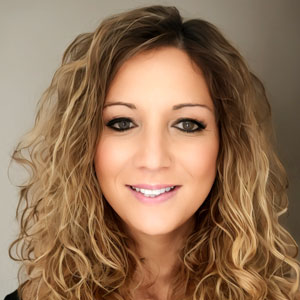
License: PhD, LCSW, LCAC
Years of Experience: 23 years+
Dr. Amanda Slaten is a sound leader with 23 years of experience in Behavioral Health. She has a bachelor’s degree in Psychology, a master’s degree in Social Work, and maintains two master’s level clinical license(s) of Licensed Clinical Social Worker (LCSW) and Licensed Clinical Addictions Counselor (LCAC). In addition, Dr. Slaten obtained a PhD in Business Psychology to affirm her commitment to leadership within the Behavioral Healthcare industry. She is a compassionate leader that has dedicated her professional career towards advancing service delivery for treatment of mental health and addiction.