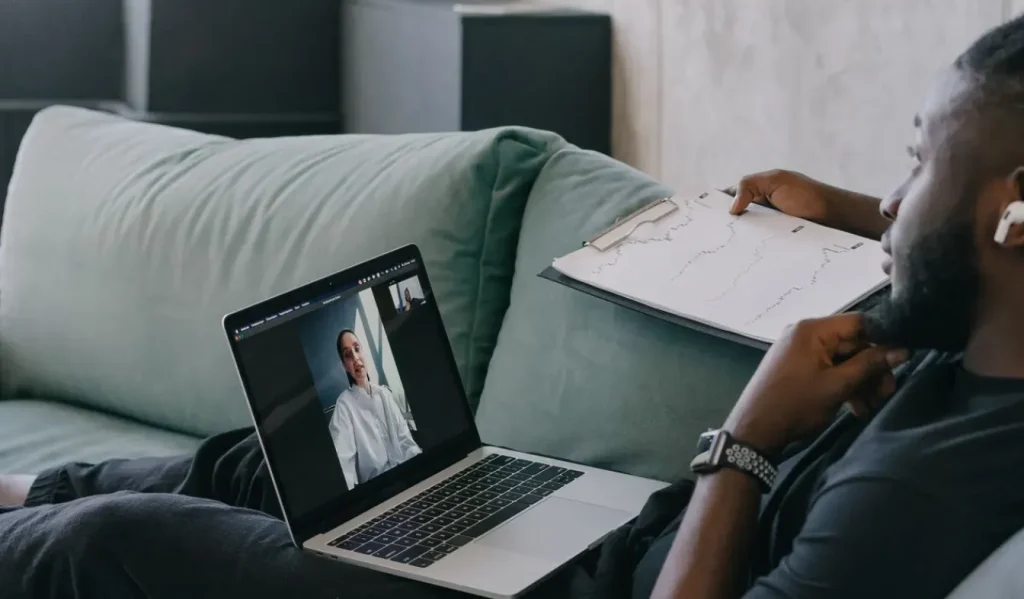

How Online Therapy Helps People Struggling with Suicidal Thoughts
Nights stretch. Thoughts loop louder. With online therapy for suicidal thoughts, you don’t have to wait for morning. You can type, speak, or sit quietly until breathing slows. The goal isn’t perfect clarity right now. It’s steadying the next hour, then choosing one small step you can actually manage.
Why Online Therapy for Suicidal Thoughts Works In Real Life
Crisis doesn’t book appointments. Online therapy for suicidal thoughts meets you where you are—bedroom light low, screen glow, heart racing. A clinician slows the tempo, helps you notice what’s spiking, then sketches a short plan. Not grand. Useful. With online therapy for suicidal thoughts, energy goes into talking and trying, not traveling.
Choice helps engagement. Some nights, a voice helps. Other times, typing feels safer. That flexibility keeps you showing up. Show up enough and momentum nudges forward—even if it’s uneven. Online therapy for suicidal thoughts builds progress in small, durable pieces.
Stabilizing Fast With Suicide Prevention Online
When the surge hits hard, suicide prevention online offers a quick structure. A counselor guides grounding techniques—counting breaths, naming what you see, loosening your jaw. You start by taking safety steps appropriate to your situation and creating a simple action list for the next twelve hours. With online therapy for suicidal thoughts, stabilization comes first; big decisions can wait until the noise lowers.
If risk rises, the path widens calmly: immediate steps now, follow-up care online scheduled next. You stay informed at each turn.
Choosing Online Crisis Chat When Speaking Feels Impossible
Words sometimes catch in your throat. Online crisis chat lets you type, edit, and try again. That slower pace lowers pressure. Counselors offer suicidal ideation support in short, clear prompts. You practice a skill in the moment—three slow breaths, a cold splash, stepping to a quieter room. Then you check back in.
Chat can be a doorway. If the weight feels deeper, you pivot from online crisis chat into online therapy for suicidal thoughts sessions. Same honesty, more structure, and a plan you can carry into tomorrow.
Practicing Skills Through Virtual Crisis Therapy
With virtual crisis therapy, a licensed clinician appears on your screen—steady tone, simple questions. You map the last few days: the trigger, the spiral, the numbness after. Together, you build three actions for the next 24 hours. You test one on the call. Awkward first try, smoother second. That’s the pattern online therapy for suicidal thoughts leans on—practice until a skill becomes portable.
When urges spike, you add coping skills for self-harm urges that fit real life: grounding in the shower steam, box breathing before a call, texting a trusted person with one preset line. You learn what works in your environment, not a perfect one.
Staying Private With Confidential Online Counseling
Privacy builds trust. Confidential online counseling explains what stays private, what’s documented, and the rare moments when safety must take priority. Plain language. No guessing. You choose video, phone, or chat—whatever feels safest today.
Clarity lowers fear. With online therapy for suicidal thoughts, you know the boundaries before you speak. That makes space for honesty, which is where the work actually moves.
Extending Care With 24/7 Crisis Counseling And Follow-Ups
Some nights need an immediate connection. 24/7 crisis counseling bridges the gap—brief grounding, a calm plan, and a warm path into scheduled care. Then early intervention for suicide risk keeps you from sliding back: short check-ins, tiny course corrections, and follow-up care online that stays consistent even when schedules wobble.
Think tide, not straight lines. With online therapy for suicidal thoughts, you don’t start over each time. You adjust and keep going.
Resources & Next Steps
- Explore NIMH’s guidance on crisis help and finding support — what to expect when reaching out, and how to prepare for a first conversation.
- Learn how SAMHSA explains the 988 Lifeline — call, text, or chat options and how local responses connect when needed.
Ready to Begin?
If tonight feels heavy, start small. Our clinicians offer online therapy for suicidal thoughts—quietly, wherever you are. Ask a quick question, or schedule time now: contact us or book a session. The moment you reach out, the weight shifts—just a little, but enough to notice.
FAQs

License: PhD, LCSW, LCAC
Years of Experience: 23 years+
Dr. Amanda Slaten is a sound leader with 23 years of experience in Behavioral Health. She has a bachelor’s degree in Psychology, a master’s degree in Social Work, and maintains two master’s level clinical license(s) of Licensed Clinical Social Worker (LCSW) and Licensed Clinical Addictions Counselor (LCAC). In addition, Dr. Slaten obtained a PhD in Business Psychology to affirm her commitment to leadership within the Behavioral Healthcare industry. She is a compassionate leader that has dedicated her professional career towards advancing service delivery for treatment of mental health and addiction.