
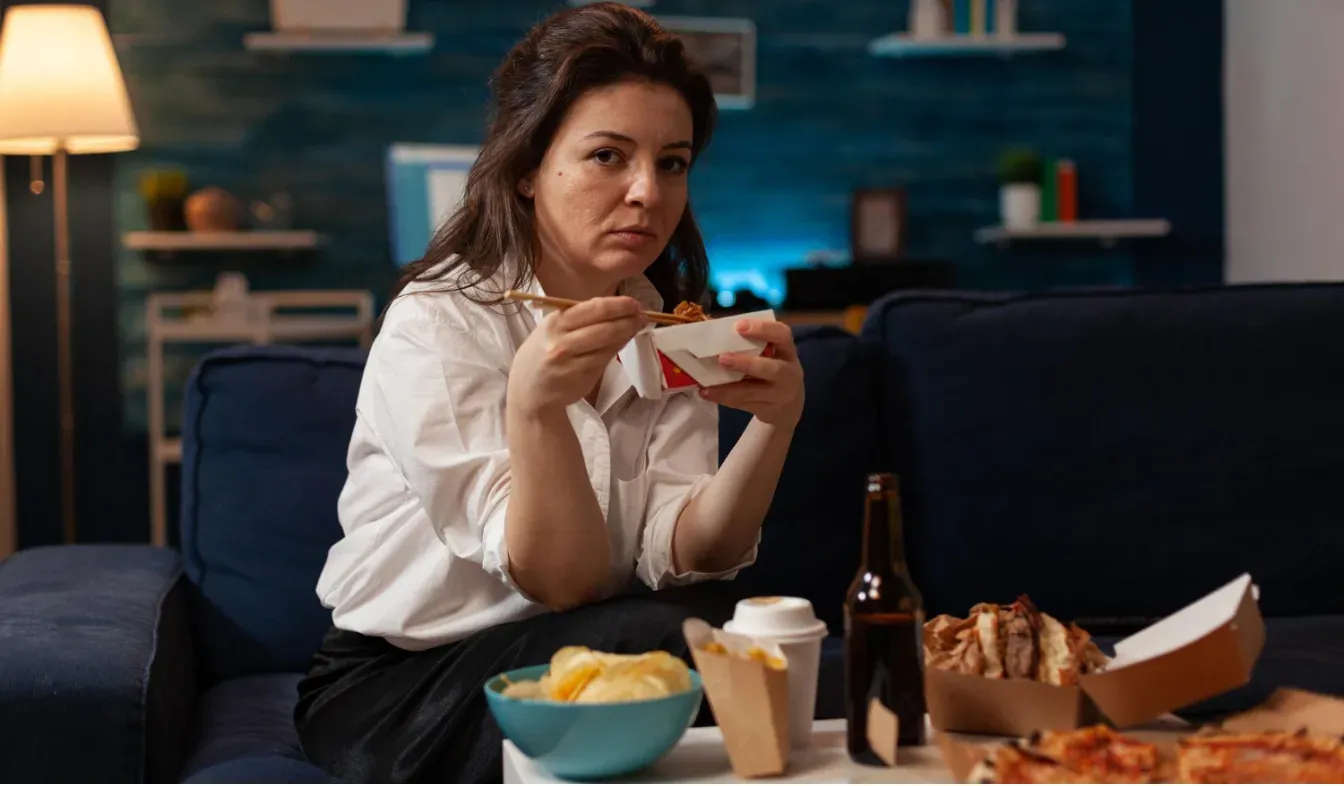
When Disordered Eating Becomes a Mental Health Crisis
It usually starts quietly. You skip breakfast. You promise it’s just once. Later, maybe you eat and feel awful for it. Then it happens again. After a while, food becomes the enemy, or the only thing you can control. That’s when it shifts, from diet to distress.
At 24/7 DCT, we see this all the time. People who thought they were just being “disciplined” realize it’s something deeper. Online therapy for eating disorders is where we start untangling that. It’s not the food itself. It’s what it’s carrying for you: fear, stress, maybe even a kind of protection. Therapy gently starts to unpack this.
What Does It Mean When Disordered Eating Turns Into a Mental Health Crisis?
You can’t always see it. Sometimes, even the person struggling can’t. They might look fine, even healthy. But inside? Every meal feels like a test they keep failing. That’s the turning point. When food isn’t fuel anymore, it’s fear.
Disordered eating treatment online gives people a way to talk before that fear takes over. There’s no pressure to sound brave or know the right terms. You just start talking. One sentence, then another. That’s how recovery begins: messy, slow, but real.
How Do Eating Disorders Affect Mental and Physical Health?
The body can only carry stress for so long. Sleep goes first. Energy fades. Then the mood. And soon, it’s all tangled: sadness, guilt, hunger, fatigue. It’s not vanity; it’s pain showing up through the body.
Therapists at 24/7 DCT help bring the two back together. Through mental health counseling for eating disorders, you start learning how to listen again, not to rules or numbers, but to yourself. The small signals your body gives, the quiet hunger, the tiredness you kept ignoring. Healing doesn’t rush; it unfolds, slowly, honestly. And it starts online.
What Are the Warning Signs That Disordered Eating Is Becoming Dangerous?
It starts quietly. A skipped meal turns into two. You begin avoiding food with friends, saying you’ve already eaten. You spend hours thinking about what you’ll allow yourself tomorrow. That’s when worry starts creeping in; when food becomes the only thing that feels in control.
Therapists at 24/7 DCT look for the smaller signs too: exhaustion that doesn’t fade, dizziness, sudden withdrawal, or shame after eating. Through disordered eating treatment online, people talk before the damage runs deep. You don’t need to wait until your body shows it’s breaking. The first conversation is already a kind of help.
Why Do Eating Disorders Develop in the First Place?
There isn’t one answer. Sometimes it’s genetics, how your brain handles stress or reward. Sometimes it’s trauma that never gets over. “It’s often a combination of pressure, perfectionism, and trying too hard to be in control.
Clients notice the patterns in online therapy for eating disorders. Something offhand about their body. A family culture that honored self-discipline. The infinite scrolling through honed images that appear to be goals but are really punishment. Therapy doesn’t remove those roots, but it can help to weaken their hold one thought at a time.
Who Is Most at Risk of Developing an Eating Disorder?
It can touch anyone, but some stand closer to the edge. Teens navigating new bodies. Athletes are under constant pressure to perform. Women are taught to shrink themselves to be acceptable. Even men who hide behind gym routines that look “healthy” but feel punishing.
At 24/7 DCT, therapists watch the same patterns play out; people who grew up around body talk, family diets, or silent competition. They learn to separate identity from appearance through mental health counseling for eating disorders. It’s no longer about being an image, but sort of learning to be without being afraid of it.
What Treatment Options Are Available for Eating Disorders?
There isn’t one single path. Everyone’s story with food is different, so therapy needs to bend with it. At 24/7 DCT, most people start with talk, gentle sessions, online, one step at a time. CBT for eating disorders helps untangle the beliefs that tie worth to control. Family therapy can rebuild understanding, where meals stopped being peaceful.
Some find comfort in group sessions, realizing they’re not alone in this. Others need nutrition counseling, not to count calories but to relearn what “enough” feels like. Every bit of progress counts, even the days you only manage breakfast.
When Does Disordered Eating Require Inpatient or Intensive Care?
Sometimes online therapy isn’t enough. If your heart feels irregular, if fainting becomes common, or eating feels impossible, that’s not discipline; that’s danger.
24/7 DCT often guides clients toward higher levels of care when needed, inpatient or partial programs that focus on safety first. Getting more help isn’t failure. It’s the body asking for rescue. And that deserves to be answered quickly.
How Can Therapy and Counseling Help in Eating Disorder Recovery?
Recovery never really follows a straight line. Some mornings, eating feels normal. Other days, it’s hard just to sit with the plate in front of you. That’s alright. Therapy leaves space for both progress and pause.
In sessions at 24/7 DCT, therapists help slow the noise that never stops; the one that keeps score in your head. Over time, food stops feeling like an enemy. It turns back into nourishment, not judgment.
With online therapy for eating disorders, clients start noticing safety in small things; the first meal without guilt, breathing without counting, laughing mid-bite. It’s quite a progress. But it’s real.
What Role Do Support Systems Play in Recovery From Eating Disorders?
Healing alone rarely works. When silence sets in, the mind starts believing its worst ideas. Family, friends, even peers in recovery; they remind you of the version of yourself that exists outside the struggle.
At 24/7 DCT, therapy sometimes opens that circle wider. A sibling joins a call. A partner listens, learning when to talk and when not to. It’s not about fixing someone. It’s about staying while they rebuild.
Recovery doesn’t ask for perfection; just presence. And the right support makes that possible.
Can Eating Disorders Be Prevented or Risks Reduced?
You can’t always stop it before it starts. But you can notice small things; the way a child studies their plate, how someone jokes about “earning” food, or skips a meal to feel in control. Those are moments that need gentleness, not silence.
At 24/7 DCT, therapists see prevention as awareness, not discipline. Slowing down, naming what’s happening before it grows. Helping parents and teachers talk about food as nourishment, not a reward. It’s sometimes just a movement of one phrase: “you look healthy” instead of “you look thin.” It’s not a big deal, but it changes everything. Prevention is not perfect; it’s paying attention when it matters.
When Should You Seek Immediate Help for Disordered Eating?
If you’re blacking out, if your heartbeat feels strange, if you’re too weak to stand, that’s not willpower. That’s your body asking for help.
Therapists at 24/7 DCT help people recognize those turning points before they become emergencies. And if it already feels unsafe, if you can’t eat, or the thoughts get dark, reach out right now. First, call 911 or a reliable helpline. Then, when you can breathe again, come back and book a session.
You don’t need to be out there for that moment by yourself; you just need to breathe toward safety. For ongoing mental health care, you can always contact us.
FAQs

License: PhD, LCSW, LCAC
Years of Experience: 23 years+
Dr. Amanda Slaten is a sound leader with 23 years of experience in Behavioral Health. She has a bachelor’s degree in Psychology, a master’s degree in Social Work, and maintains two master’s level clinical license(s) of Licensed Clinical Social Worker (LCSW) and Licensed Clinical Addictions Counselor (LCAC). In addition, Dr. Slaten obtained a PhD in Business Psychology to affirm her commitment to leadership within the Behavioral Healthcare industry. She is a compassionate leader that has dedicated her professional career towards advancing service delivery for treatment of mental health and addiction.